Learn how creators safely sell feet pics online in 2026 using secure platforms, anonymous profiles, and proven strategies to build consistent income
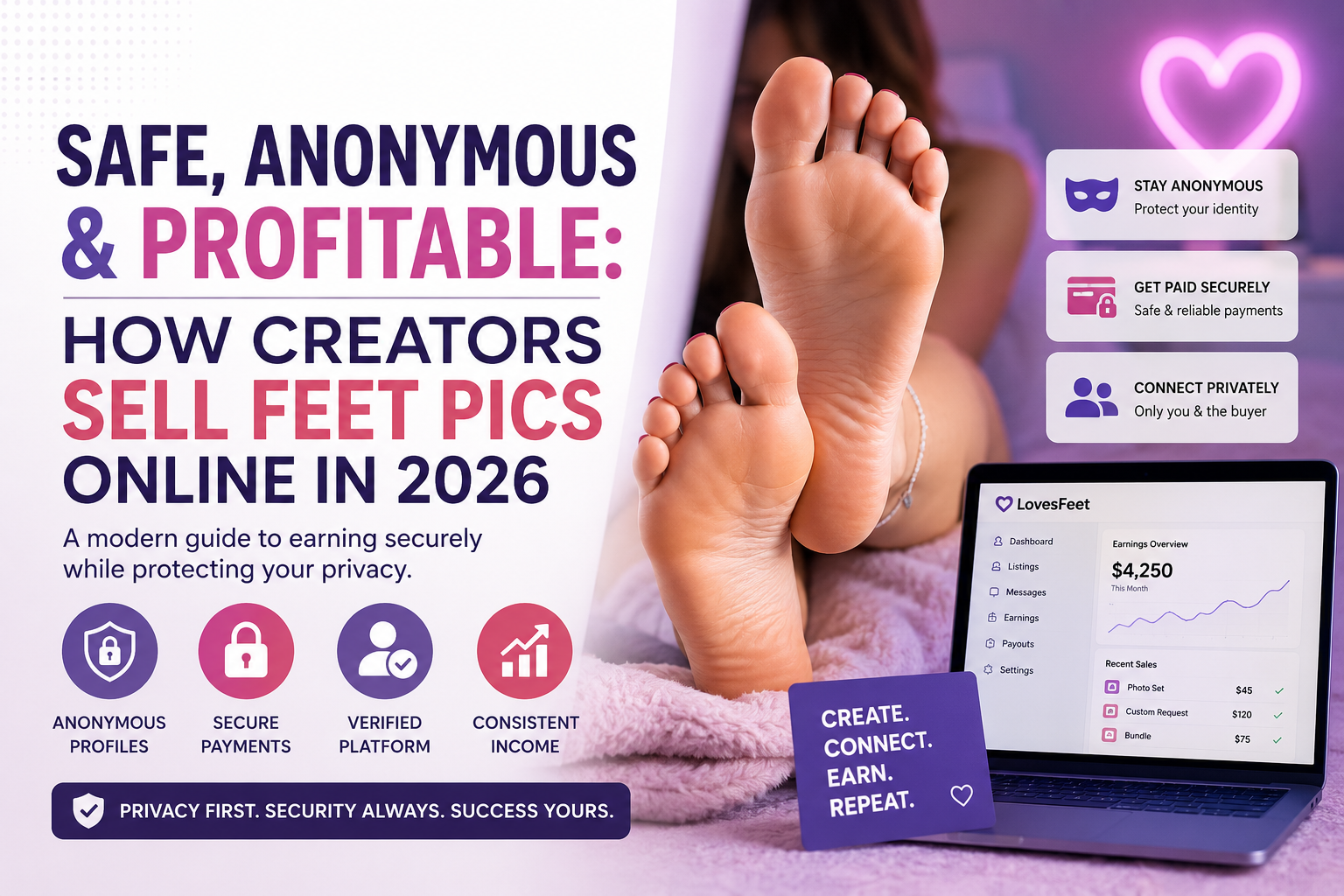
The idea to sell feet pics online is no longer a fringe internet concept. In 2026, it sits inside a wider creator economy where micro-content, niche photography, and direct-to-buyer platforms have become normal income streams.
What has changed most in recent years is not demand—it is structure. Buyers are more organized, platforms are more regulated, and creators are more aware of privacy risks than ever before.
Today, people entering this space are not just looking for quick money. They are looking for:
A safe platform to sell feet pics anonymously
A predictable way to earn without exposing identity
A system that prevents scams, chargebacks, or harassment
This shift is why structured marketplaces like LovesFeet are gaining attention. Instead of relying on social media DMs or unregulated marketplaces, creators now prefer controlled environments with built-in safety layers.
If you're wondering how to sell feet pics safely online, the process starts with protecting your identity before uploading any content. Create a separate email address, use a pseudonym, remove image metadata, and choose a verified marketplace that offers secure payments and buyer verification. Avoid accepting payments through direct messages or sharing personal information with buyers. By following these basic practices, creators can reduce scams, maintain anonymity, and build a sustainable income over time.
Unlike traditional freelancing, feet content selling depends heavily on anonymity. Most creators never reveal their real identity, and in many cases, they build completely separate digital personas.
In 2026, anonymity is not optional—it is standard practice.
A typical professional creator setup includes:
A separate email address used only for selling content
A pseudonym that does not connect to real-world identity
Image uploads that avoid metadata exposure (location, device details, timestamps)
Strict separation between personal and creator social accounts
This structure allows creators to earn without risking privacy leakage. It also helps maintain long-term sustainability, especially for those treating it as a side income rather than a public brand.
Platforms like LovesFeet reinforce this approach by designing profiles that do not require personal exposure, giving sellers control over what is visible to buyers.
What matters most when choosing a platform to sell foot content?
In earlier years, the biggest concern in this niche was demand. In 2026, demand is stable—but safety has become the real deciding factor.
Creators today are more aware of risks such as:
Fake buyers and payment scams outside platforms
Chargeback fraud after content delivery
Identity exposure through direct messaging platforms
Unauthorized redistribution of images
Because of this, serious sellers avoid informal channels and instead choose structured marketplaces.
A secure platform to sell feet pics anonymously now typically includes:
Verified buyer and seller accounts
Encrypted messaging systems
Controlled payment processing
Dispute resolution and fraud monitoring
Limited off-platform communication
LovesFeet positions itself in this category by focusing on controlled transactions and identity verification systems that reduce fraudulent behavior on both sides.
The result is a more stable earning environment where creators can focus on content instead of risk management.
The misconception about this industry is that income comes from single photo sales. In reality, consistent earnings come from repeat engagement and structured content offers.
Most successful creators in 2026 use three main income methods:
Standard photo sets
These are simple themed uploads such as barefoot shots, pedicures, or aesthetic close-ups. They usually form the entry-level pricing tier.
Custom requests
Buyers often request specific styles, angles, or scenarios. This is where pricing increases significantly because of personalization.
Bundles and collections
Instead of selling individual images, creators package sets together. This increases average order value and improves buyer retention.
Across the market, basic content typically sells at lower price points, while custom or exclusive content can reach significantly higher per-order value depending on demand and creator reputation.
The key factor is consistency. Creators who post regularly and respond quickly tend to build repeat buyers, which is more valuable than one-time sales.
Many beginners assume social media is enough to sell content. However, in 2026, platforms play a much larger role than exposure alone.
Social platforms can generate traffic, but they lack:
Payment protection
Identity verification
Buyer accountability
Dispute resolution systems
This creates unnecessary risk for creators, especially those prioritizing anonymity.
Dedicated marketplaces like LovesFeet solve this problem by combining three functions in one place:
A controlled marketplace for listings
A secure payment system for transactions
A privacy layer between buyer and seller identities
This structure is what allows creators to scale safely instead of managing everything manually across different platforms.
Long-term success in this space depends less on viral attention and more on system building.
Creators who perform well typically follow a consistent workflow:
They create content in batches rather than single uploads, ensuring they always have material ready. They maintain a small set of visual styles so buyers recognize their work easily. And they refine pricing over time based on demand rather than guessing.
Another important factor is communication. Buyers expect responsiveness, especially for custom requests. Slow or inconsistent replies often lead to lost sales.
Professional behavior matters more than many expect. Even in niche markets, trust drives repeat purchases.
What is your biggest concern when selling foot content online?
Buyer psychology in this industry is straightforward. People spend more when they feel safe.
In surveys and platform behavior analysis across similar creator markets, three factors consistently influence purchasing decisions:
Trust in platform security
Confidence that content is authentic
Perception of privacy protection
This is why verified marketplaces outperform informal selling channels. Buyers are more likely to spend when they believe transactions are protected and private.
LovesFeet builds around this principle by prioritizing verification and structured transactions rather than open, uncontrolled exchanges.
Getting started is simpler than most expect, but structure is important from day one.
A typical onboarding process looks like this:
Creators register on a verified platform, complete identity confirmation, and set up a private seller profile. They then upload initial content sets, usually starting with simple categories like barefoot shots or aesthetic close-ups.
From there, growth depends on consistency. Posting regularly, adjusting pricing based on engagement, and responding to custom requests builds momentum over time.
The creators who treat it as a structured side business rather than casual posting tend to see more stable results.
The market for selling feet pics online in 2026 is no longer defined by novelty. It is defined by structure, safety, and platform reliability.
Creators who focus on anonymity, secure platforms, and consistent output are the ones most likely to succeed. While income levels vary, the combination of low entry barriers and global demand continues to make it an accessible digital side income.
For those looking for a safe platform to sell feet pics anonymously, structured marketplaces like LovesFeet represent the direction the industry is moving—secure, verified, and designed for long-term creator protection.

 Hebrew
 Russian
 Arabic


Share your thoughts