Keeping some information off a public profile is different from being anonymous to the platform. Registration can request personal details, while public profile information has a different purpose. Review the current forms, account controls and applicable privacy notices before deciding what to share.
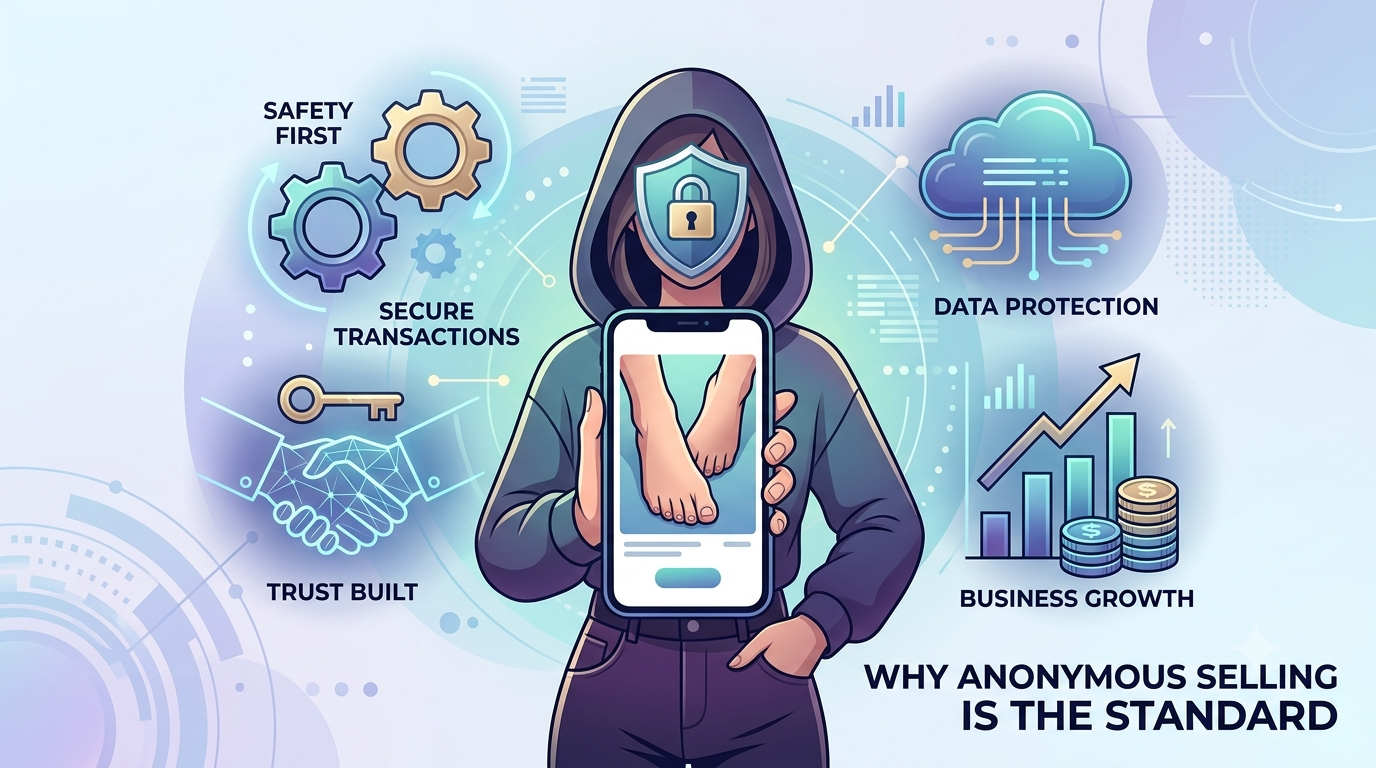
A display name or photograph can be public while account-administration details are collected separately. Signup requests personal information. A display name does not make you anonymous to the platform.
Account information: Diva registration guide.
Privacy remains the biggest reason creators avoid revealing their identities.
Many foot content sellers are students, professionals, parents, or entrepreneurs with established careers outside the creator space. Maintaining anonymity helps preserve those aspects of their lives.
Others simply prefer to keep strict boundaries between public and private identities.
Anonymous selling offers several advantages:
Reduced risk of personal information being shared.
Protection against harassment or unwanted contact.
Greater confidence when starting.
More control over digital presence.
The ability to focus attention entirely on the content itself.
Interestingly, buyer behavior has also evolved. Many customers purchasing foot content prioritize aesthetics, creativity, and consistency rather than knowing a creator's real identity. This has further normalized anonymous selling practices.
What is the most important factor when selling foot content anonymously?
Check the full frame for documents, addresses, location clues, reflections and other details you did not intend to disclose. Choosing not to show a face does not guarantee anonymity.
For related guidance, see image framing and background checks.
Use the notice for your account type and the current account controls to understand what is collected and displayed. If a notice appears inconsistent with a form, ask support before entering information. This article does not promise anonymous transactions, encryption features or universal protection.
Would anonymity make you more likely to start selling foot content?
Use consistent public details and avoid publishing information you want to keep private. Review older profile text and images as well as new uploads. A verification indicator is not a guarantee of another person's behavior.
No. Public naming and information collected for account administration are separate.
No. Confirming an email address and completing third-party identity checks are different processes.
For clarification, contact support before supplying information. Do not rely on this guide as legal advice.
Check what is public, what the account form requests and which notice applies to your account type. Where the information is unclear, seek clarification rather than assuming that your identity or activity cannot be connected to you.

 Hebrew
 Russian
 Arabic


Share your thoughts